Thursday, March 10, 2016

Q(uestions) & A(griculture)

I took a few students to a competition and for my sub plans I used the FFA New Horizons Magazine. There was a great interview with Secretary Tom Vilsack in it and an extended exercise gave the students the opportunity to develop their own questions about agriculture for Mark Killian, the person in charge of agriculture in AZ. The students wrote some amazing questions that I just had to share with you!


  • Agriculture includes caring for the ecosystem, so what are some practices that people are utilizing to help it?
  • The population is expected to double by 2050, so what will food availability be like then? What are ways we can grow enough food for the growing population in safe and healthy ways?
  • What is being done and/or what can we do to help the poaching of animals?
  • What are ways we are fixing our ecosystem and problems like water pollution and deforestation?
  • How are you working to educate people about the truths of agriculture?
  • What are we doing to bring more people into the agricultural world?
  • What are some suggestions you have to become a part of Arizona's agriculture?
  • What is the greatest challenge Arizona agriculture is facing?
  • What do you feel is Arizona's greatest agricultural accomplishment?
  • What should this generation do to change the face of agriculture?
When I read these questions I was so impressed and proud. These are the questions we should all be asking those in charge of agriculture. This generation needs to ask questions and find the truth. With so much media propaganda it is imperative that we teach our students how to think for themselves and do research on those issues facing the agricultural industry. 


Wednesday, August 12, 2015

Saying NO!


As I review the title of this blog post I realize that it may be a bit misleading. I am not writing a post about how to say no rather writing a post about why it is so dam hard to say no and why I don't condone it.

I have made it through the first week of my third year teaching. The following are requests made by students thus far:

"Can you be the advisor of a dance club, so we can boost school spirit?"

"Can we get goats on campus?

"
"Can we show animals, both small and livestock?"


"Are we getting chickens? If we are can I use them as my SAE?"


"Are we doing an officer retreat? We should do it over a weekend, spend the night at a hotel, and do team building activities."


"Are we going to be participating in the Ag. Literacy events?"


"Can I start an aquaponics and use it for my SAE? I could even grow plants to feed the class pets."


"I am a little queasy when it comes to dissections. Can I have alternate assignments so I can still be in the class?"


"Will you be my senior project mentor?"


"Will you proofread this project proposal for me?"


"This is the student handbook. Will you read over it and make any spelling and grammar corrections?"


"Can I sign up for a CDE? Can you explain what a CDE is? Do you win those plaques for competing in a CDE?"


"Are we taking a FFA trip again this year? Where to? How much? When?"

"Can we buy embroidered t-shirts for the FFA officers to wear during events?"


"Do I have to wear OD? It is really hot Marsh!"


This is just to name a few. Wondering what my response to these request was? I bet you can guess. I said, "Yes, we can definitely do that!"

Now, each time I say those six words, a piece of me dies inside, but amazingly enough I say it with an unwavering amount of enthusiasm each time. How? Why? I know with each new committment I make to my students that I must uphold it and it will require a great deal of time from me with no monetary compensation. With that being said there are a few things I want to make note of.....


  1. I am NOT a teacher for the money. I work two jobs just to support myself and buy items for my classroom and the FFA. I drive a 2006 Honda Civic and do not own anything name brand. I neglect myself to give my students what they need to be successful. 
  2. I look forward to Mondays. I look forward to going to bed some nights just because I know when I wake up I get to go to school and be with my students. I choose this profession because I love my students and I love seeing them excel in all they do.
  3. I remember the first time I was exposed to agriculture education and FFA. More importantly, I remember WHO I was. Without ag ed, FFA, and my amazing ag teacher (Mr. Robert Leib) I would have not be as successful as I am today. FFA undoubtedly changed my life and who I am for the better. I want to provide my students with all of the opportunities I was afforded and more. 
  4. I know that all the extra time I put in, the sleepless nights, the rolling out the sleeping bag because it is pointless to leave my classroom for the night, the immense amounts of caffeine I intake just to keep my eyes open, the tears, the frustration, and the thought of "the light will never come" all leads to one thing-->the ultimate goal--> STUDENT SUCCESS. I know that when that success appears it will erase all of those bad memories mentioned above and I will, even if for just a split second, find utopia. Utopia because my students have grown, worked hard, and accomplished a goal they set for themselves. 
So, no I do not know how to say no. Yes, I am aware of the looming fear of "burning out." 
I figure five great years is better than 20 mediocre years. 
I will continue to say yes, until my mind and/or body will no longer allow me to. 


Saturday, August 23, 2014

African Safari Trip

My AMAZING Trip to South Africa!

My wonderful school gives students the opportunity to shadow and work alongside a large animal veterinarian in South Africa. Our two week trip began in late May and we took ten students from all five campuses on this amazing adventure.


We had the opportunity to tranquilize a few zebras to perform health checks and transport them to a lower populated safari. 


Poachers will cut the horns right out of the rhino's head to sell them on the black market. We put GPS trackers in these beautiful creatures to help catch and cut down on poachers. 


This lion's home is at Born Free, an animal conservation center. They rescue abused animals and care for them because they cannot be returned to the wild.
 I had the opportunity to ride in an open helicopter. This is the same helicopter that Dr. Brothers darted the zebras and rhinos out of!


The most beautiful coast ever! We spent the day walking along the sand dunes in Port Elizabeth. These dunes are the largest natural sand dunes in the world!


This safari has been specifically designed to give the students of the Arizona
Agribusiness  and Equine Center in the USA an insight into the conservation and wildlife veterinary   issues that are faced in South Africa on a daily basis.

This safari took us 'behind  the scenes', giving us the opportunity to observe the work of a resident  South African wildlife veterinarian, and discover the fantastic world of wildlife conservation and guiding  in Southern Africa.

We were guided by a Wildlife  Veterinarian, researchers, various local guides, and an accredited  Field Guides Association of South Africa trainer and assessor and his facilitators, all of whom shared their knowledge and expertise in their specialized field, giving us a unique and rare insight into the world  of wildlife in Southern Africa.

Not only did we have a fantastic time  but our participation  also meant significant financial  support to the various wildlife projects.

The Best Part?!

Listen to what the students had to say about their experience! I had the students answer a few questions after the trip. Check it out.

What was the most memorable moment for you?

Payton said, "Getting to go to the orphanage and seeing how content those kids were with what they have. It really opened my eyes to how much happiness can come from so little."

Megan said, "The most memorable moment for me was the rhinos. We were able to touch them and feel them breath. It was the most amazing experience!"

Meagan says, "I loved the little things, like the stars, hearing the jackals, and being so close to a rhino you could see the hair on their ears."

What is the one thing you will never forget?

Michele said, "I will never forget the fact that most problems are caused by humans and animals just happen to be involved and get punished for human mistakes."

Nathan said, "Something I will never be able to forget is listening to Dr. Brothers' opinions and thoughts on conservation and the well-being of wildlife through a business perspective. To be able to have that opportunity is unforgettable!"

Chelsi said, " I will never forget seeing the beauty of the wilderness. To be able to see these wild animals up close and know I am doing something to help and protect them.

Do you believe global experiences are important?

Emma says, "Yes! Reading something from a textbook doesn't give you that long lasting connection that you receive when being in a REAL place. It changes people and it changes the way you thing/perceive the world that you live on."

Colee says, "If we stay in our own bubble forever we will never experience the richness of other cultures."

Kaley said, "Yes, it gives you a different perspective on life."

Tuesday, April 1, 2014

Agricultural Education - Envisioning the Future: NAAE Advocacy Video Challenge


What does the future hold for students in agricultural education programs? Watch this short video produced by students at the Arizona Agribusiness and Equine Center Red Mountain to learn what they get from agricultural education. This video received honorable mention in the 2014 NAAE Advocacy Video Contest.

Thursday, March 20, 2014

Reproductive Unit Reflection to Character Building?!

In my Animal Science class I have been teaching the students about the reproductive system. Here are some of the concepts the students have learned throughout the unit"

  • Artificial Insemination Techniques
  • Male Anatomy
  • Female Anatomy
  • Estrous Cycle
  • Reproductive Hormones
This is A LOT of information to comprehend. I employed five or six different techniques to help the students understand the concepts. The students mapped out the hormone track with chalk, created anatomy posters, took notes, watched videos, and engaged in class discussions all out reproduction. I knew this unit and the concepts involved were difficult and it was going to be a challenge for me, as an educator, to adequately portray the information in a way the students will understand and comprehend the information. Yesterday the students took their unit exam. I set up the exam in a very unorthodox manner. There were four stations that the students rotated through in groups. Two of the stations the students where able to utilize one another's knowledge and the other two was individual work. 

Today I organized the class in a Socratic Circle to reflect on the unit. My goal was to find out what activities throughout the unit worked well and which was needed improvement. It was pretty much just a reflection on my teaching so I could tweak it for the next time. The conversation started out as normal. The students were telling me what they enjoyed and what they didn't like. Then all of a sudden the conversation turned when a student brought up the fact that he didn't like working in randomly chosen groups because he didn't feel comfortable with some of his peers. Some other students commented in agreement saying that they didn't want to speak up or ask questions because they didn't want to look stupid in front of the others. They don't want others to judge them so they don't feel like they can be themselves.

Up until this point in the conversation I remained silent just absorbing everything the students were saying. I had to interject when I sensed a huge lack of confidence in the majority of my students. When I looked at each one of my students sitting in front of me with skepticism on their faces and obvious thoughts of self-doubt running through their minds I could no longer keep quite. 

The following is my "speech" to the class: "If you are uncomfortable walking into a crowded room and speaking or working with strangers it is because you have not embraced your strengths. Each and everyone of you has your own strengths and wonderful characteristics that you need to find and embrace. When you walk into a room you  need to say to yourself I am special because I am... fill that in with your dominant character trait. Have the mindset that you are valuable and you have something to offer. Make it a point to share your strengths with others."

At this point a student interjected me and said, "I don't feel special and I certainly can't tell myself I am special." Wow! Apparently, what I see in each one of my students is not what they see in themselves when they look in the mirror. I told them that I think they are special and they have all impacted me this year. I can tell each student one of their strengths and how it has benefited me as an educator and the class as a whole. 

"Marsh! You think we are special? Tell us why we are special! Tell us what our strengths are!" This was the class's chant once I finished my sentence. The rest of the period I went through each student and told the class why that student was special and what they have to offer. I only got through about ten students and when the bell rang all the students told me, "You know we have to continue this tomorrow, because I want to know why I am special."

Our reflective discussion on the reproductive system unit took a ninety degree and landed on character and who you are. I learned a big lesson today-students have self-doubt and it is our job as educators to help our students see their true potential. We can be the catalyst for our kids. We can help them see and develop their strengths. We know their character and who they really are, even before they know! 

Educators-Never forget the power and influence you have on your students and their self-perception. You can make a student's bad day, good. 

Use your power to empower!!!!

Friday, January 31, 2014

Can we PLEASE make some connections?

I have a difficult time getting my students to make connections between past units and the unit we are currently working on. I have been working on my students' ability to think critically and solve problems through connecting content. We are six months into the school year and finally I do not have to give my kids the death stare for ten minutes for them to make some connections. It was a long and tedious six months, but it brightens my day when I can see the light bulb and they make this profound discovery that what they learned two weeks ago about soil relates to what they are learning right now about plants!!!! : )

In my animal science class we have been progressing through the systems of the animal for a few months. As we reached the third system (nervous) I began to realize that my kids really had no idea as to why and how all of these systems work together. I decided we were going to spend a whole class period making connections. I made the activity worth 20 points and everyone in the class had to participate at least once or EVERYONE in the class will fail the assignment.

Each student had to draw a picture on the board and explain how their picture connected with another picture already on the board. They had to use the information they learned from the different systems we discussed. Not only was this activity great for getting their minds geared for making connections it was also a great review for the test.


Here is a picture of the board. It looks a little convoluted, but it did the trick : ) Plus, they had a blast. The kids talked about it for weeks and wondered when we were going to do it again. 

Sunday, September 8, 2013

Plant Science Upgraded

I teach plant science and my second unit of instruction is plant anatomy and physiology. I did not have a projector at the beginning of this unit so I had to improvise. I drew a plant cell on the board and labelled each organelle and then discussed its function.

After this discussion I split the class into two teams (there are only ten students in this class). I gave them a project rubric, which asked them to create a 3D model of either the plant cell or the animal cell (one group did the plant and the other did the animal cell). I gave them two days in class to construct this model. It had to be labeled and all of the organelles we discussed must be on the model. The second part of the project asked them to create a PowerPoint that included each organelle, its function and a picture. They had to give me the history of the cell and what makes an animal cell different from a plant cell and why. Each group presented both their model and their PowerPoint to the class.

 After we discussed organelles we moved on to the external parts of a plant. I created a Zeega highlighting the basics of the plant. Check it out: Parts of a Plant. We discussed how function correlates to anatomy. To test their understanding on this concept I had them create an edible plant. They had to utilize different candies (which I provided) as parts of a plant. Once they where done they presented to the class and had to explain why they choose that candy for that plant part.

Friday, August 2, 2013

~Let's Get Organized~


I moved 2,600 miles to Arizona for a great agricultural educator position, which means I am finally a real ag teacher : ) I just can't believe I get to teach students everyday. The four years of college was definitely worth it! Since I have my own classroom now I went crazy coming up with ideas to get it organized.

Below are some pictures and descriptions of what I did to increase productivity (for the students and myself), set a routine, meet state standards and keep the students informed.


  • For every unit I post the objectives so the students have a clear picture of where we will be going that unit. Also, I post the English and Math Common Core standards that correlate with that unit as well as the CTE and Science standards. That way if anyone walks into my classroom they can clearly see which standards my lessons are hitting. 


  • This is my FFA calendar board. I used construction paper and covered each piece with letter size laminating sheets (much cheaper than having each one professionally laminated and you can buy 50 of the sheets for about $15.) Dry erase markers work awesome on the sheets so each month I can erase and move to the next month. This eliminates the excuse students use, "I didn't know." 


  • I teach three sections of Introduction to Agriculture and one section of Plant Science. Each class is assigned a color. I have two of these bin rows in my classroom, one right by the door and one on my desk. The one by the door has the daily papers the students need. For instance, I have my course syllabus and classroom contracts in them now. Each day the students will check their class bin for papers before taking their seat. The second bin is for my use. I will collect homework, projects and tests put them in the class bin and place graded paperwork there too. It is just a great way to keep all the classes organized. 


  • This is the Student Inventory I have every student fill out on the first day of class. Standard teaching evaluation forms want to know how you are creating a felt need in your classroom and if you are connecting the content directly to the student. This student inventory is my way of getting to know my students quickly and tailoring my lessons to their specific interests and needs. I print them on index cards and keep them in a index card box. Of course, the cards and color coordinated for each class.


  • I created a "Why in the World" sheet. This is very similar to Bellwork, which most of you have heard and/or utilize. This sheet has three columns: Date, Do Now and Wrap It Up. As soon as the students enter the room they answer the Do Now question on the board. The question relates yesterday's lesson to today's lesson and normally it is a critical thinking question. In the Wrap It Up column I ask the students a comprehension question from the lesson at the very end of the period. I found that this helps keep the students from putting away their things and lining up at the door before the bell even rings. 

Wednesday, April 24, 2013

Grow House-Connecting the Youth and Community to Agriculture

Grow House

One of my colleagues shared the Grow House with me at a PAAE (Pennsylvania Association for Agriculture Educators) meeting. As soon as he showed this to me my wheels started spinning in my mind. How can I make this permanent? Can I connect this to the community? What about agriculture literacy? 

This project grew into a Community-Based Service Learning project that I carried out at my coorperating center. I taught my plant science students a fifteen day unit based on plants and gardening. I had a guest speaker from PSU Pesticide Education come in to inform the students about IPM (Integrated Pest Management) and I brought in two Master Gardeners to tell the students how to test the soil, when to plant and how to prep the soil for gardening. 

The students then created four workshops that they taught to 64 third graders. There workshop topics where: How to Grow a Plant, Parts of a Plant, Farm Safety and Farm to Food. These agriulture literacy workshops was all student driven. They did everything! I just gathered the supplies and arranged the time with the 3rd grade teachers. 

After the workshops students stayed after school with the Master Gardeners to assemble the Grow House on the elementary school playground and prepare the soil for planting. 

Shortly, we will plant the vegetables in the Grow House garden. The agriculture education students volunteered to pull weeds, water and harvest the vegetables over the summer. All the vegetables grown in the garden will be donated to the local food bank. 

This was a really great project to do. After the assembly of the Grow House, the next day the students came in and wanted to expand it! The response I received from this learning project was overwhelming in a good way. 

Engaging Our Community

Think about the agriculture department you were a part of in high school. Think about the agriculture department your child is involved in now? Are there differences? Odds are you are shaking your head yes right now. Why you ask? Because each agricultural education department is based on the needs of the community. Every district is different with a completely different set of wants. Why is this important? Oh, great question! This is important because as an agricultural educator I think it is my job to fuse the students with the community. I like to involve my community in what my students are learning.

Recently, I gathered with my colleagues to share some Community-Based Service Learning Project ideas.  I thought these ideas where just a terrific way to expand students' knowledge and get involved and give back to the community, so I wanted to share them with you.

1.) Build Bluebird boxes to set up at a local park or game land. Have your students create tags that can be fixed to the front of the boxes giving passerbys important information on Bluebirds and their habitats. Involve your local conservation district to help the students plan the right habitat for the Bluebirds. (Mackenzie McCollum)

2.) If you want a great project to go with your floriculture/flower arranging class here it is: Take your class to a local community center (example: Grange &/or Young Famers) and have your students work with the community members to teach special needs students or elementary school students how to create floral arrangements. These arrangements can be sold for Valentine's Day and the proceeds can be donated to your charity of choice. (Adam Peachey)

3.) Do you have a courtyard that isn't being used by your school district? Here is an idea: create an outside classroom. You can utilize your plant science class, landscaping class and metals class. The whole school will be able to enjoy and utilize this outdoor classroom. This is a great way to show the students that what they learn in the classroom is applicable in the real world. (PJ Adam)

4.) Create a Community Garden!! Allow local stakeholders to apply for a garden plot. AG. Ed. students can take a part in advertising, kick-off banquet, building the plots and holding educational workshops for the stakeholders who will be gardening the plot. Image all the SAE Proficiency areas your students could apply for through this project!!!!!!! (Darla Romberger)

Thursday, April 11, 2013

Top Ten Reasons Why My Student Teaching Cooperating Center Rocks!!!!


I am finishing up my student teaching experience at Greenwood High School in Millerstown, PA. Before I dive right into the meat of this post I wanted to share with you how the student teachers are placed at their cooperating centers. First, we are given a list of about 50 schools that qualify and want to have a student teacher. It is our tasks to visit, send e-mails, research and make phone calls to these schools to narrow it down to the top three centers for us, individually. Finally, you have chosen the top three and you know which one you really, really want to go to at this point. We are done yet, though. Next we have an interview with two professor in the college of Ag, where we must plead our case as to why we should go to our #1 school. Well I begged and I pleaded and I succeeded : ) After spending the last 14 weeks at Greenwood, I am so glad that I practically got down on my hands and knees to get the opportunity to come here. My cooperating teacher has been so helpful and provided me with priceless feedback.

I wanted to share with the NAAE community just why on Earth Greenwood is so AMAZING.

Here are the top 10 reasons why Greenwood's Ag. Ed. department rocks!!!!!

1.) Greenwood's Ag. Ed. department is greatly supported by the administration.

2.) Greenwood S.D. is pretty small, so the community is close and very active in the Ag. Ed. department.

3.) The Ag. Ed. teachers are extraordinary. Just to prove my point ---> Mrs. Krista Pontius, my cooperating teacher : ), just received the Teacher Impact Award. Mr. Mike Clark, the second Ag. Ed. teacher, won the National Agriscience Award.

4.) The students are extremely motivated. I have one student who attends HACC classes all morning and then drives to the H.S. to finish up the last of her high school credits. About 75% of the Ag. Ed. students are involved in an extracurricular sport.

5.) Greenwood lives out the "Living to Serve" line of the FFA motto. The students were so inspired by the community service at National Convention that they organized and held the first Perry County Hunger Banquet.

6.) The teacher's outside of Ag. Ed. are inspiring. I observed one of the biology teachers and to my surprise I was actually understanding what she was talking about! The chemistry teacher allowed me to borrow his equipment for some of my labs and the shop teacher helped me construct a grow house. Everyone is just very supportive of one another.

7.) The FFA chapter attends... well EVERYTHING! The students sign up for every event and Mrs. Pontius and Mr. Clark make it happen!

8.) The Advisory Council is made up of extremely active and wonderful community members, whose sole purpose is to make the educational experience for the students the best.

9.) Greenwood's Ag. Ed. department has
two teachers, 312 students, 12 classes taught a day and 103 FFA members. The classes include: Ag. Exploration, Veterinary Science, Animal Bioscience, Science of Food Processing, Senior Agriculture (credited class), Biotechnology and the list goes on.

10.) Mrs. Pontius and Mr. Clark are always striving to be better, whether it is personally or as a department. Example: Technology is the new wave and they are trying to incorporate it as much as they can into their lessons. Greenwood launched a "Bring Your Own Technology" initiative. This year it was only dispersed to ten teachers as a test run. Of course, the Ag. Ed. department volunteered to be a part of the pilot! Mrs. Pontius and Mr. Clark try to stay ahead of the game for their students' success.

Thursday, March 28, 2013

iPad Mania

I know that technology can be a little scary and you are never sure where to start. I have an iPad and every day I find new and more effective ways to incorporate it into my curriculum. To make it a little easier for those who feel timid when approaching the iPad I have composed a list of educational FREE applications that can be downloaded to your iPad and utilized in your classroom. The list below is categorized by subject.

Ag. Mechanics:
Virtual Engine-Gives you step-by-step directions on how to tear down an engine
Engine-Shows you how a multi-cylinder engine works
CI-HD-Provides you with how-to and video tutorials of anything dealing with construction

Energy & Climate Change:
Inside Energy-Discusses new energy topics and you can calculate energy efficiency
Verde-Calculate your carbon footprint
IEA Stats-Compares varies energy resources (graphs, articles and statistics)
NASA Viz-Amazing narrated slideshows discussing environmental issues (great for showing the Ozone Layer depletion)
Earth Viewer-Shows you how the land masses on Earth has changed over time and it shows you the carbon dioxide and oxygen amount

Envirothon Training:
IGFA Lite-Fish Identification
LeafsnapHD-Snap a picture of an unknown plant or tree and this app will tell you what you're looking at
Plant Pictures-Plant and Tree Identification
PocketRanger-A complete guide to state parks and forests

Science (Biology):
iCell-Provides a detailed picture and description of cell parts
BioIQ-Interactive game to test your knowledge of cells
Science VL-Awesome dictionary for all science terms
Bone Model-Gives a great representation of the skeletal system and how it moves
CardioTeach-Interactive heart; shows how it pumps and identifies the different parts

Video Media:
TED
PBS
Smithsonian

Presentation Tools:
Idea Sketch-Great Mind Mapping app
ShowMe-Create and share whiteboard-style tutorials
Skitch-Allows you to upload a photo and add shapes and words to it
ScratchWork-Allows you to have a webpage and the app open at the same time so you can create a worksheet using internet resources
PearlTrees-Is a visual and collaborative curation tool that allows you to collect, organize and share any URL
Doceri-Top-notch presentation tool, create a powerpoint and share it from your iPad
SimpleMind+-Mind Mapping app

Landscape:
iScapeFree-Create a landscape with blueprints

Food Science:
USDAFoodSafety

Plant Science:
ID Weeds
PestBook-Identifies pests

Look up the common core standards through the CommonCore app!!


I hope this list of education apps helps you utilize iPads to their fullest extent. You can purchase a cord that allows you to hook up your iPad to your projector for easy viewing.

: )


Monday, March 18, 2013

*Let's Get Cutting*

I am all about teaching and then showing. We studied the reproductive system for weeks in my veterinary science class and finally it is time to show them the real thing.

First I had the students dissect foal testicles.


The next day all the students got the chance to practice artificially inseminating a bovine. The students where really surprised at how hard it was to get the rod through the cervix's maze.


Something new I tried was once we got to actually dissecting the bovine reproduction track I cut just below the cervix and made each student feel the cervix with their finger. This gave them the opportunity to feel how complex and tight the cervix is. It shined some light on why it was so difficult for them to get the AI rod past it. 

Using both ovaries I was able to show the students what each stage of the developing follicle and degenerating corpus luteum looks like. 


It's Corntastic

Well, I tried a new lab with my Exploratory Agriculture class. We have been discussing corn biotechnology and all of the products that corn helps to make. I thought that making plastic from corn would be a good wrap-it up for the students. 

The plastic is really easy to make. All you needs is cups, spoons, water and cornstarch. Add a teaspoon at a time of water and cornstarch to the cup until the mixture is a thick glue consistency. Pour it into your hand and work it into a ball, but be careful because as soon as you let it go it turns into a liquid! 

This type of liquid is called non newtonian. 

After this lab I showed the Myth Busters video "Walking on Water." 


Monday, March 11, 2013

State Legislative Leadership Conference=PA FFA rocks : )

I am currently attending the annual SLLC. I brought six wonderful students! It is such a great time to collaborate with the amazing agriculture educators across the state.

Learning about PA Ag. Ed. Grassroats Advocacy, NAAE COP Updates and SAE Emphasis in the Three Circle Agriculture Education Model.

And of course, it is always nice to catch-up with my fellow pre-service teachers.

Sunday, March 10, 2013

Neat Ideas to Keep Under Your Hat

Here is a great way for students to learn vocabulary words.


Want to incorporate more science labs into your curriculum? Visit this website to view Hands-On Experiments. Two professors from the University of Pennsylvania: Dr Ingrid Waldron and Dr. Jennifer Doherty have created a wonderful website that has at least 20 hands-on labs that can be used in a variety of courses. 

Keep checking back for more : )


***How to Get Them Motivated***

I am teaching a reproductive unit right now and we are studying how the hormones work. I had no idea how challenging this would be for me and my students. I explained the hormones in three different ways, which even included flying around the room and singing out the hormones. Even after all of those charades I didn't feel like it was clicking. I have some basketball players in my class and they had a big State Championship game the same day of the hormone exam. I made a deal with the players that if they got an A on the exam I will paint my whole face for the game. Well, their excitement trickled down to every other student in the class. The picture will let you know the outcome : )

Monday, March 4, 2013

Community Service/Fundraising Idea with Bailing Twine

I was just out in my stalls gathering up all of my old bailing twine and I was about to throw it away when I thought there has to be something I can do with this twine. I found quite a few neat ideas that can be turned into a community service project and/or fundraising opportunity.

1.) A lot of big companies are recycling twine now. Members can collect the twine and if there is enough (semi tractor trailor full) they will come pick it up and give the chapter so much for the twine.

2.) Here are a few crafts that can be created out of used bailing twine. This would be neat as an appreciation gift for community members.

3.) These hay nets would be great fundraising ideas for the department. They are very practical too. I know when I go on trail rides you can never have enough hay nets. 

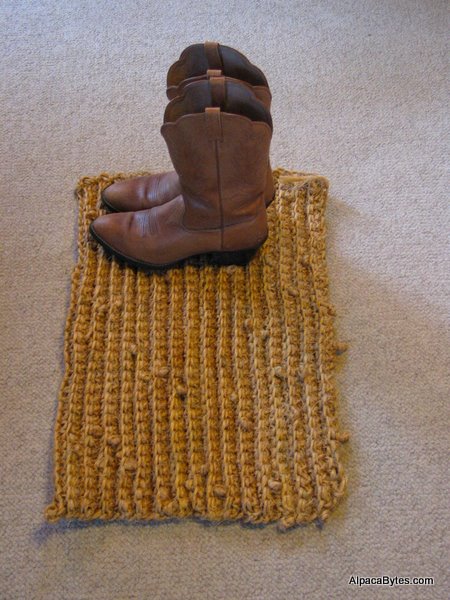
4.) My personal favorite is the twine mats! Even if I can't incorporate this into my classroom, I will make one for my tack room! 


Sunday, March 3, 2013

Animal Reproduction

In lieu of trying new things, I used an app on my iPad called Noteshelf and I created a pictorial of the phases of the Estrous Cycle. I screenshot each drawing, e-mailed it to myself as an attachment, used my laptop to create a PowerPoint and then uploaded it to my Google Drive. Whew!! It is not as difficult as I made that sound. Hopefully, this will spark further ideas!


My First Blog : )

This is my first official blog! My hope for this blog is to be become a reflective partitioner, learn from my mistakes and document my growth as an educator. 

Well, I just got back from an eye-opening technology conference hosted by BCTE. My interest has been peaked about how I can efficiently and effectively utilize technology in the classroom. Here are some "rules" that I picked up on when using technology.

1.) Pick the right platform
2.) Give students options, which will make them engaged in their work and stay on-task more
3.) Get a social media organizer, like Hootsuite.

Please check out these two Google Doc Presentations. They will tell you all about Google+ and how you can use it in the classroom and how to create, use and manage QR codes.

GREAT IDEAS:

How to Get Organized and Share Your Resources

Everything You Need to Know About QR Codes!